

Do you fear permanently sacrificing the brilliance of your body art for smooth skin, while poorly managed laser hair removal on tattoos carries risks of burns and discoloration?
We analyze with scientific rigor the physical incompatibility between selective photothermolysis and dermal pigments to provide you with a complete guide to securing your aesthetic journey without the slightest compromise. Access our exclusive safety protocols, white-marker mapping methods, and discover why electrolysis is the gold-standard alternative for ensuring perfectly smooth skin while protecting the integrity of your most precious designs.
Technological incompatibility between hair removal lasers and ink pigments
People often think that light sorts things out on its own. Yet combining laser treatment and tattoos is literally like playing with fire.

Mechanism of selective photothermolysis on melanin
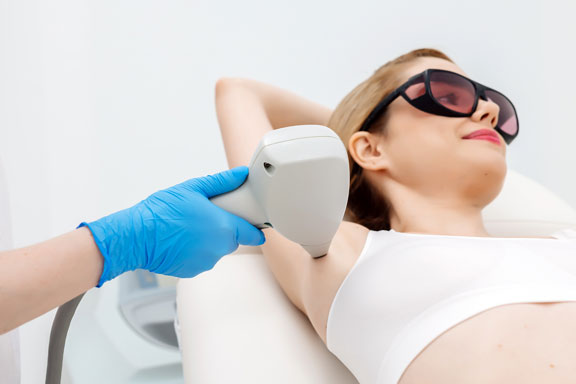
The laser targets dark melanin to destroy the hair follicle. It simply looks for a dark target to heat the root. This is the foundation of the effectiveness at Epilia.
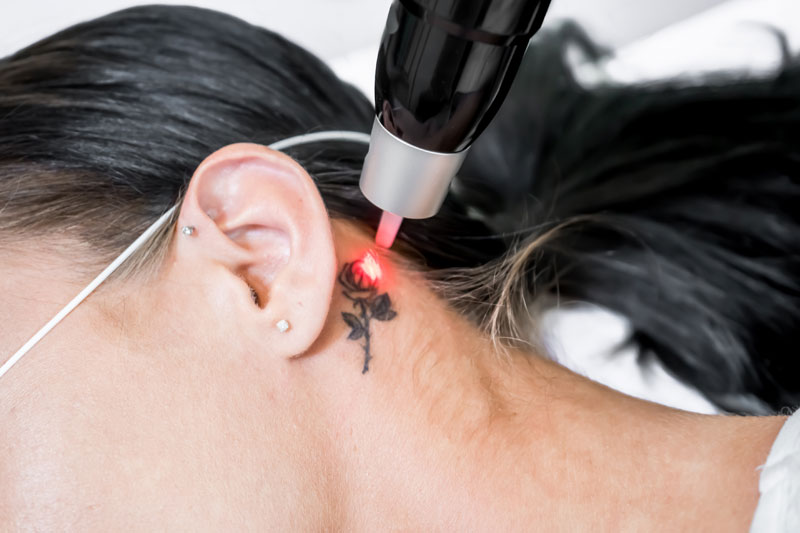
However, the beam unfortunately confuses tattoo pigment with hair pigment. It strikes indiscriminately at anything dark. The energy then concentrates massively on your design. Your inked skin absorbs this light energy without any distinction.
This sudden absorption triggers immediate overheating of the epidermis. The risk of skin damage becomes almost certain for your skin.
Technical distinction between hair removal lasers and tattoo removal lasers
Wavelengths differ completely depending on the objective. Hair removal operates in milliseconds to eliminate the hair. Tattoo removal uses ultra-short pulses in nanoseconds or picoseconds.
The hair removal laser burns the ink instead of fragmenting it cleanly. It cannot remove a complex design with precision. The aesthetic result often ends up being disastrous.
Here are the key technical differences. Epilia applies absolute rigor. Your dermis remains protected.
- Pulses: milliseconds vs nanoseconds.
- Thermal effect: destruction vs fragmentation.
- Risk: burns on tattooed areas.
Risks of burns and aesthetic damage on tattooed areas
Since the technology makes no distinction, the physical consequences on tattooed skin can be serious and immediate.
Thermal consequences and immediate skin reactions
The laser makes no distinction between hair and ink pigment. As a result, the skin may develop blisters or painful bullae (phlyctenes). This is a severe second-degree thermal reaction. The pain is far more intense than during a normal session.
Infectious complications may occur if the skin barrier is broken. Hypertrophic scars represent a real long-term risk. Healing requires a great deal of time and patience.

Accidental exposure of a tattoo to a hair removal laser can cause burns requiring urgent medical care.
Irreversible alteration of the design and color changes
The ink may bleed or fade unevenly. The sharp contours of the tattoo can disappear completely. The design then becomes unrecognizable, blurred, and loses its original vibrancy.
The titanium found in some white inks reacts poorly. It can turn grey or a dirty yellow. This color change is often permanent.
Repairing a burned tattoo is a challenge for tattoo artists. The remaining pigments are often too altered to be easily covered. Epilia always prioritizes a proper diagnosis and the safety of your skin.
3 safety protocols to protect your tattoos
To avoid these risks during a laser hair removal session on tattooed areas, expert centers like Epilia apply strict protection methods.
Marking with a white marker and respecting safety margins
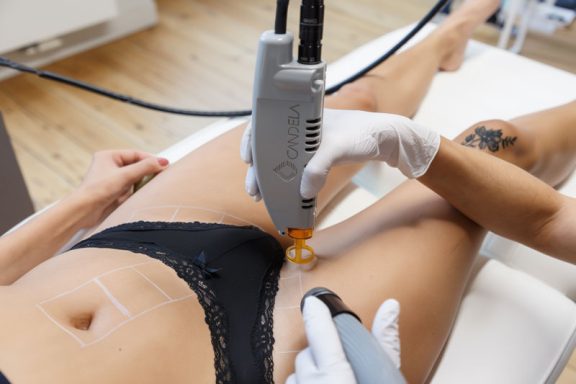
The practitioner covers the edges of the tattoo with an opaque white marker. This barrier reflects the laser light. It protects the dark pigments from the device’s thermal absorption.
A margin of two centimeters is maintained around the design. The treatment never gets too close to the contours. This guarantees the complete integrity of your artwork. In this way, any visual damage is avoided.
The use of transparent shaving gels also helps significantly. The practitioner therefore maintains a perfect view of the tattoo’s boundaries.
Medical evaluation and diagnosis of adjacent areas
A preliminary diagnosis is the only way to identify risk areas before delivering the first laser pulse.
Moles are often present near tattoos. The professional must carefully isolate them with a white pencil. Their presence can sometimes modify the safety boundaries.
Only a specialized center knows how to manage these complex areas. Safety relies on a rigorous analysis of every square centimeter of skin. This is our daily commitment.

What alternatives should you choose to remove hair from tattooed skin?
If laser treatment is prohibited on ink, other solutions exist to keep your skin smooth without damaging your tattoo, as recommended by Epilia’s experts.
Electrolysis and manual methods to preserve the ink
Electrolysis is the preferred solution here. This technique targets each hair individually with a fine needle. It does not spread any heat to the surrounding tissues. It is the perfect option for your tattoos.
| Method | Tattoo Safety | Duration of Results |
|---|---|---|
| Laser | Prohibited on ink | Long-lasting |
| Electrolysis | Safe | Permanent |
| Manual shaving | Safe | Temporary |
| Depilatory cream | Caution (chemical) | Temporary |
Be cautious when shaving. Avoid depilatory creams containing ammonia. These chemical substances often irritate tattooed skin. However, manual shaving remains a safe and reliable option.
Managing the timeline between laser treatments and a new tattoo project
Respect the waiting periods after your sessions. Wait at least two months before tattooing a treated area. Your epidermis must remain calm and fully regenerated. This is essential for clean ink absorption.
However, allow more time after tattoo removal. If you have removed an old design, the waiting period becomes longer. Allow six months before starting laser hair removal on tattooed skin. This gives the dermis time to return to its normal structure.
- Waiting time before a new tattoo: 8 weeks.
- Waiting time after tattoo removal: 6 months.
- Monitor the skin’s flexibility and absence of redness.
Mastering laser hair removal around tattoos requires absolute precision to prevent thermal risks and preserve your designs. By following our safety protocols or choosing electrolysis, you ensure the integrity of your body art. Seek professional expertise now to achieve long-lasting smooth and perfectly protected skin.
FAQ : Laser hair removal and tattoos: risks and protection
Can laser hair removal be performed directly on a tattooed area?
Applying a laser beam directly to tattooed skin is strictly prohibited and considered dangerous. Our technology is based on the principle of selective photothermolysis: the laser targets melanin to destroy the hair follicle. However, the device cannot distinguish the natural pigment of the hair from the pigments in the ink, leading to massive energy absorption by the tattoo.
What are the real risks for the skin and the appearance of the tattoo?
Accidental contact can cause severe thermal burns, the appearance of blisters (bullae/phlyctenes), and hypertrophic scars. From an aesthetic perspective, the consequences are often irreversible: distorted contours, loss of sharpness, or significant discoloration that can affect up to 75% of the design. White inks containing titanium may also turn permanently grey or black.
What safety margin should be respected around a tattoo?
To guarantee complete safety, our practitioners maintain a safety margin of 1 to 3 centimeters around your tattoo. This protective zone, roughly equivalent to two fingers, allows the surrounding tissues to be treated without risking thermal diffusion toward the pigments of the design. We systematically use white markers or opaque covers to precisely mark these boundaries.
What is the difference between a hair removal laser and a tattoo removal laser?
The technical distinction is fundamental: the hair removal laser operates with long pulse durations (milliseconds) to heat the hair follicle, while the tattoo removal laser uses ultra-short pulses (nanoseconds or picoseconds) to fragment the ink. Using a hair removal laser on a tattoo means burning the pigment instead of breaking it apart, causing deep skin damage.
Is there an effective alternative for removing hair from a tattooed area?
Electrolysis (electric hair removal) is the gold-standard alternative for tattooed skin. This method targets each hair individually using a fine needle, with no interaction with the pigments in the dermis. For temporary maintenance, manual shaving remains the safest option, provided that chemical depilatory creams are avoided, as they may irritate tattooed skin.
What waiting period should be respected before tattooing an area treated with laser?
We recommend waiting at least 8 weeks (2 months) after your last laser hair removal session before starting a tattoo project on the same area. This waiting period allows the skin to fully regenerate and ensures optimal absorption of the new pigments. Conversely, after laser tattoo removal, a skin recovery period of 6 months is essential before beginning laser hair removal.
How are tattoos protected during a session at your center?
Each session begins with a rigorous assessment of your tattooed areas. We protect your designs by applying an opaque white pencil along the contours, acting as a reflective shield against the laser beam. This physical protection, combined with the use of transparent coupling gels, ensures the practitioner has perfect visibility to work around your tattoo with millimetric precision.