
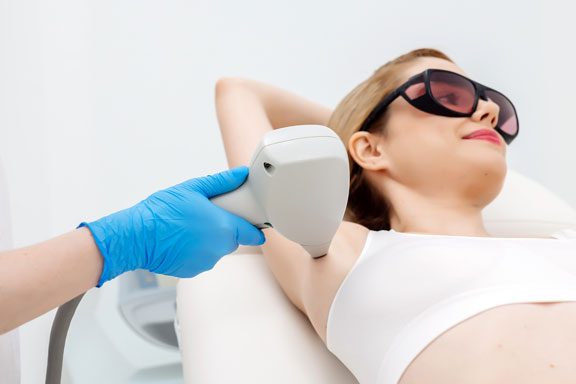

Are you still dealing with red bumps and looking for an effective laser solution for ingrown hairs to restore your silhouette after every shave?
This technology offers a radical way to finally break the cycle of chronic irritation and achieve long-lasting, smooth, silky skin by precisely targeting the hair follicle at its root.
With just a few personalized sessions, you can transform your beauty routine into a real time-saver, while enjoying the promise of a flawless body free from dark spots and renewed confidence for your next brunch with friends.
Why Ingrown Hairs Become a Real Skin Struggle
Few things are more frustrating than noticing bumps and irritation right after taking care of your skin.
At Epilia, a leader in laser hair removal, this common skin concern is treated every day, helping countless people regain smoother, healthier-looking skin.
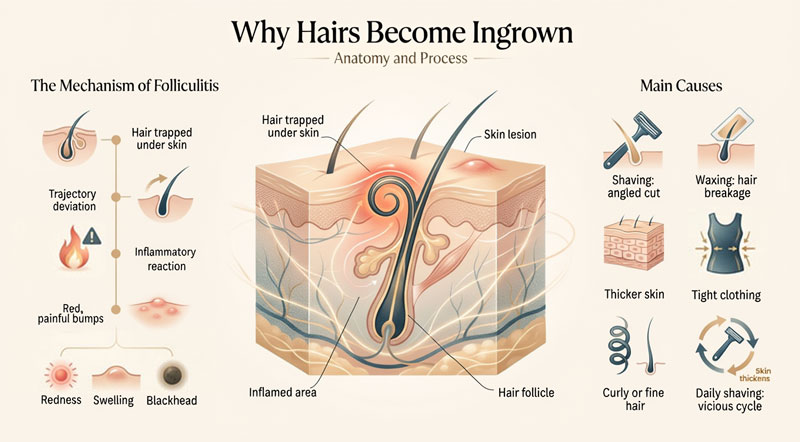
The mechanism behind folliculitis when hair grows the wrong way
Sometimes, a hair is unable to break through the skin’s surface properly. Instead of growing outward naturally, it curls back and becomes trapped beneath the epidermis.
This can trigger an immediate inflammatory reaction. Your body recognizes the trapped hair as an unwanted intruder, leading to the appearance of red, irritated bumps that are often painful to the touch.
This condition is commonly known as folliculitis.
Here are the most common visible signs you may notice during a quick skin check:
- Localized redness
- Mild swelling
- A dark spot or trapped hair visible beneath the skin
- Occasionally, a small pus-filled bump
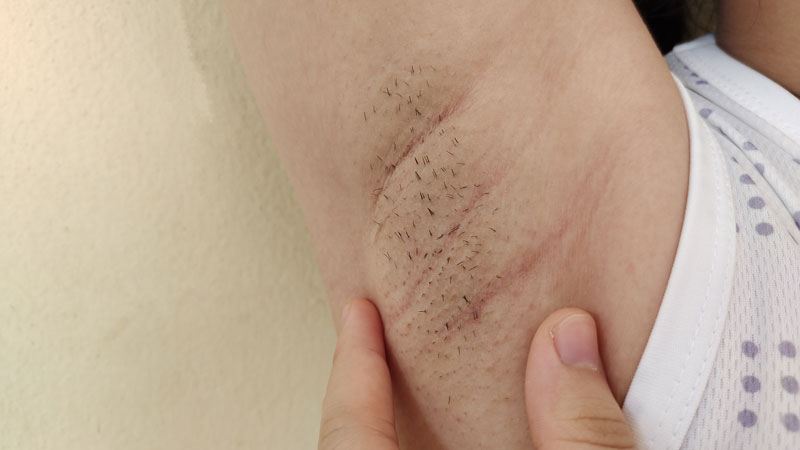
Shaving and waxing: the main causes of skin irritation
Shaving cuts the hair too sharply or at an angled edge, while waxing can break the hair shaft beneath the skin’s surface.
In both cases, the weakened hair often loses its ability to grow outward properly, increasing the risk of becoming trapped under the skin.
Skin thickness also plays a significant role in this process. When combined with external factors such as tight clothing, friction intensifies, further irritating the skin and worsening inflammation over time.

Daily shaving creates a vicious cycle where the skin becomes thicker as a form of protection, trapping fine hairs even more easily beneath the surface.
Curly or very fine hairs are the first to be affected. They simply don’t have enough strength to grow out of the skin properly.
Laser for ingrown hairs: the technology that targets the root
We have all experienced that frustration: shaving to save time, only to end up with painful inflammation and irritation.
Yet, when it comes to solving this problem for good, Epilia stands out as a leading reference in laser hair removal.
Follicle destruction: stopping subcutaneous hair regrowth at the source
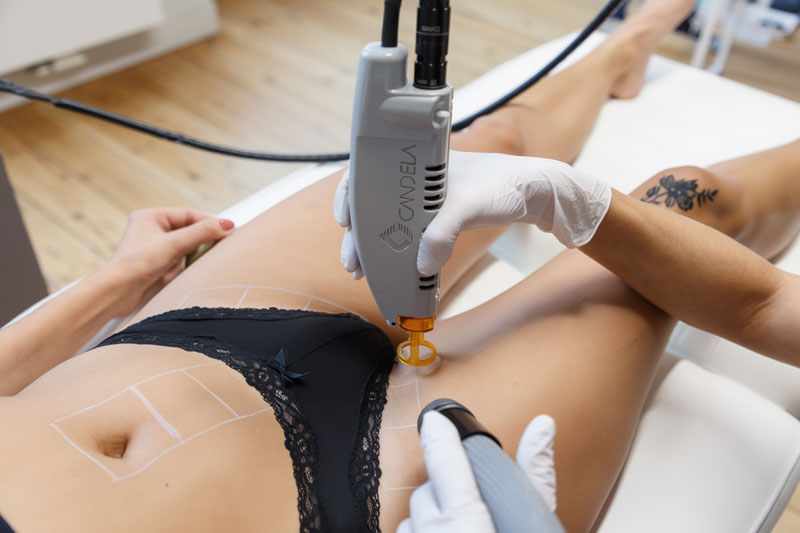
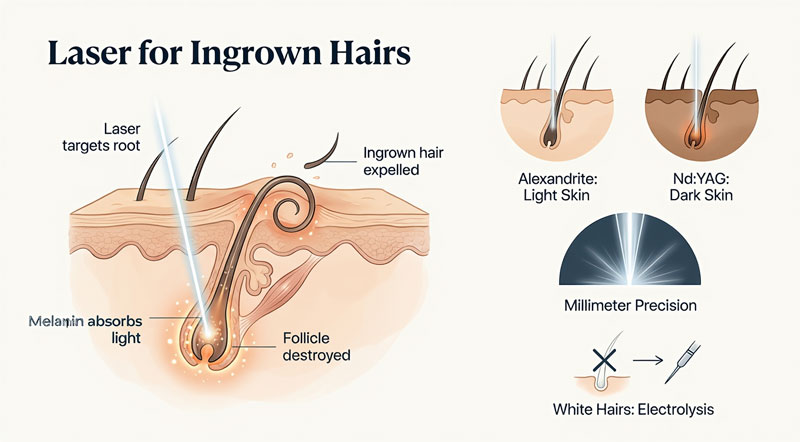
The laser emits a highly concentrated beam of light that is absorbed by melanin in the hair. This energy is then converted into intense heat, which precisely destroys the hair follicle at its very base.
This method is highly effective, even on hairs already trapped beneath the skin. The laser reaches deep into the follicle without damaging the surrounding epidermis.
The trapped hair is gradually expelled naturally by the body, while the root is permanently disabled and can no longer produce new hair.
Unlike intense pulsed light, laser technology offers millimetre-level precision to precisely target and eliminate the root cause of the problem
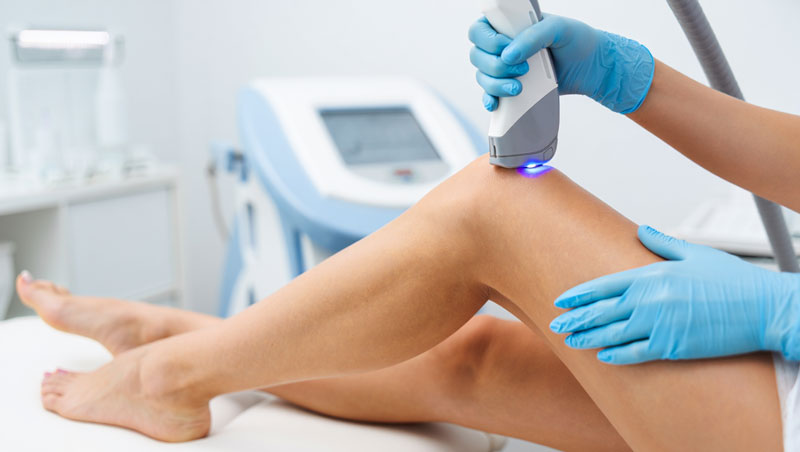
Alexandrite or Nd:YAG: tailoring treatment to each skin type
The Alexandrite laser is perfectly suited for fair skin. It effectively targets dark hair with scientifically proven efficiency and is considered the standard for classic skin phototypes today.
For medium to dark or black skin, the Nd:YAG laser is generally preferred. Its wavelength helps protect the epidermis while working deeper beneath the skin.
This ensures each patient receives a safe and well-adapted treatment, with burn risks fully controlled by experienced professionals.
It is also important to note that white hairs do not respond to laser treatment, as they lack the melanin needed to absorb light energy. In this case, electrolysis remains the only effective alternative.
Concrete results and the most effective treatment areas
After understanding the technique, let’s look at where results are most visible on the body.
Bikini line and legs: areas freed after just a few sessions
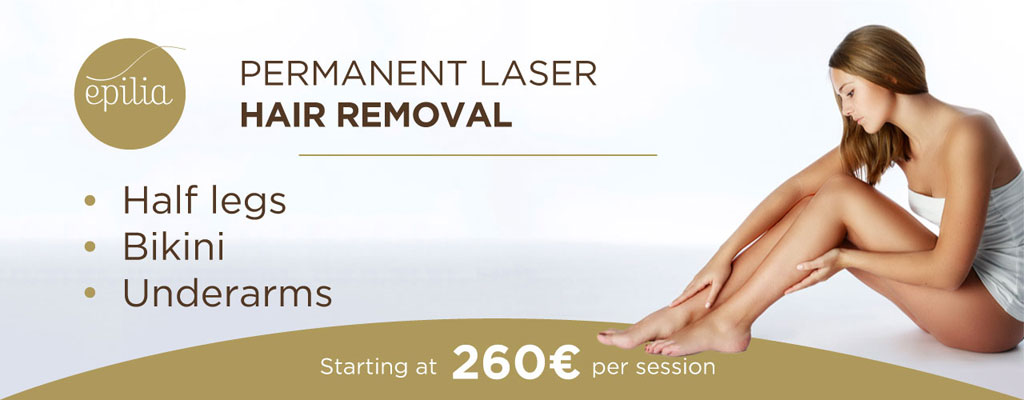
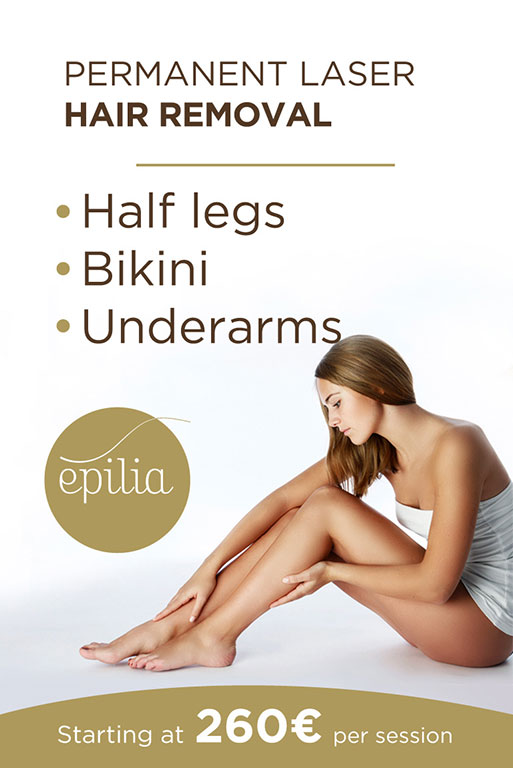
The bikini line and legs are among the most commonly treated areas. Constant friction from tight clothing often promotes irritation and infection, making these zones particularly prone to ingrown hairs.
Laser treatment for ingrown hairs provides rapid and noticeable relief.
From the second session onward, hair density visibly decreases. Irritation gradually fades with each appointment, leaving the skin significantly smoother over time.
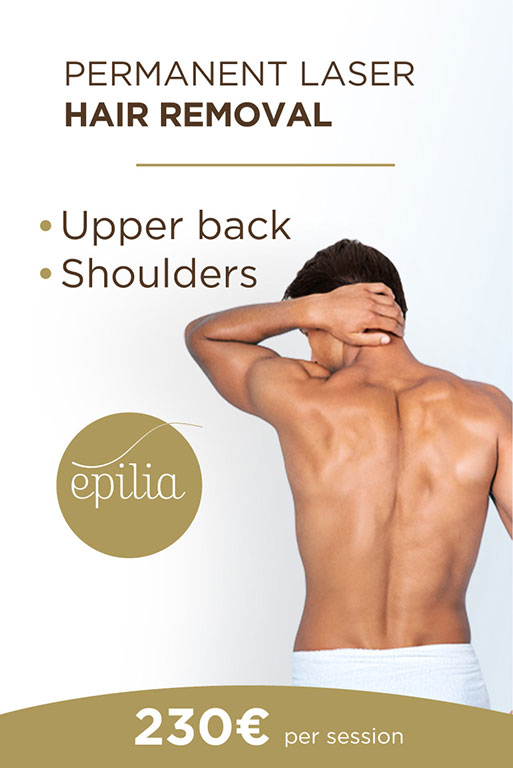
Epilia, a leading reference in the field of laser hair removal, also treats other areas such as the beard and the back.
| Treatment area | Susceptibility to ingrown hairs | Laser effectiveness | Treatment time |
|---|---|---|---|
| Bikini line | High | 5/5 | 15 min |
| Legs | Medium | 5/5 | 30 min |
| Underarms | High | 5/5 | 10 min |
| Beard (face) | High | 4/5 | 15 min |
| Back | Medium | 4/5 | 25 min |
Healing and fading of post-inflammatory dark spots
Ingrown hairs often leave behind dark marks on the skin. These pigmentation spots can significantly affect the overall appearance and smoothness of the complexion.
Laser treatment helps indirectly reduce them by addressing the root cause of the problem.
By stopping inflammation at its source, the skin is finally able to heal properly. The complexion becomes more even, and the skin texture gradually refines over time.
This results in healthier-looking skin with a smooth, refined surface and no visible irregularities. This secondary benefit is widely appreciated by patients.
Patience is essential, as skin regeneration typically takes several weeks after laser treatment.
It is also important to avoid picking or squeezing blemishes, as this can lead to permanent scarring and skin infections.

Session planning and care for perfect skin
Number of sessions and scheduling for lasting results
The number of sessions varies depending on each individual’s physiology. The ideal spacing is generally around six weeks for the body and four weeks for the face.
This schedule carefully follows the natural hair growth cycle.
Consistency remains the key to truly long-lasting results. Some sensitive areas may occasionally experience paradoxical regrowth.
Fortunately, the experts at Epilia are highly experienced in managing these specific cases.
They can adjust technical settings to help stabilize the treated area effectively.
Your commitment plays a major role in the final quality of your skin. Several external factors also directly influence long-term success.
The key points to monitor closely include:
- Respecting the treatment schedule
- Correct identification of your skin phototype
- Avoiding sun exposure
- Maintaining daily hydration
Preparation and exfoliation: the right steps to take between treatments
Gently exfoliate your skin once a week. This helps remaining hairs emerge more easily and reduces the risk of ingrown hairs. Consistent hydration is also essential to maintain skin softness and flexibility.
Protecting your skin from the sun is absolutely crucial before each appointment. Tanned skin cannot be safely treated with laser.
After each session, always apply a soothing protective cream to support healing and prevent pigmentation spots. These simple steps ensure a faster recovery and smoother results.
Arriving well-prepared makes a real difference in comfort and treatment efficiency. A few basic hygiene rules can help avoid unwanted surprises on the day of your session. Follow this checklist carefully:
- Shave the treatment area
- Do not apply deodorant
- Avoid body oils or greasy products
- Ensure there are no skin lesions
Say goodbye to the painful cycle of inflammation thanks to the radical effectiveness of laser treatment for ingrown hairs, which directly targets the follicle to free your skin.
Book your sessions today and rediscover a smooth, flawless silhouette without wasting time. Imagine your daily life free from the shadow of skin irritation.
FAQ : Laser hair removal and ingrown hairs
Why Do I Get Hairs Growing Under the Skin and How Can I Recognize Them?
An ingrown hair occurs when a hair fails to break through the surface of the skin and continues to grow underneath the epidermis.
This phenomenon, often linked to shaving or naturally thicker skin, can trigger an inflammatory reaction known as folliculitis.
Visually, it appears as small red bumps, sometimes painful, or dark spots beneath the skin that can occasionally develop into pus-filled cysts.
It is a frustrating issue many people are familiar with: these imperfections can disrupt the smooth texture of the skin, especially in sensitive areas such as the bikini line or legs.
Fortunately, these signs are not inevitable when the root cause is properly addressed.
Is laser hair removal truly effective against ingrown hairs?
Absolutely. It is widely considered the reference solution recommended by experts.
Unlike shaving, which cuts the hair at the surface, or waxing, which can break the hair shaft, laser treatment uses light energy targeted at melanin to precisely destroy the hair follicle.
By eliminating the hair’s production source, it mechanically prevents any future risk of ingrown hairs.
From the very first sessions, a noticeable improvement can be seen: the skin becomes smoother, and chronic irritation gradually disappears.
Laser treatment can also help the body naturally expel hairs already trapped beneath the skin while supporting the fading of dark spots left by previous inflammation.
Alexandrite or Nd:YAG: which laser is safest for my skin type?
The choice of technology depends on your skin phototype. The Alexandrite laser is considered the gold standard for light skin tones (types I to III) with dark hair; it is highly fast and precise.
For medium, mixed-race, or dark skin tones (types IV to VI), the Nd:YAG laser is preferred. Its longer wavelength helps protect the epidermis while acting deeper within the skin.
These technologies now make it possible to safely treat almost everyone. Only white, red, or very light hairs remain resistant to laser due to a lack of melanin, and therefore require an alternative method such as electrolysis or thermolysis.
How many sessions do I need for flawless results?
To achieve long-lasting results and a reduction of around 80% to 90% of hair growth, several sessions are usually required, depending on each person’s physiology.
Since hair regrowth follows a gradual cycle, appointments are typically spaced about six weeks apart.
This is a minimal time investment compared to the freedom of no longer having to manage unwanted hair on a daily basis.
Consistency is the key to success. By following this schedule, the laser can target each hair during its active growth phase, ensuring smoother, more even skin and long-term results without irregular texture.
What good habits should I adopt between my appointments?
To optimize your results, daily hydration is essential: well-moisturized skin stays supple and allows hairs to grow out more easily.
A gentle exfoliation once a week is also recommended to remove dead skin cells and support smoother regrowth.
However, you should strictly avoid sun exposure before your sessions, as tanned skin cannot be safely treated with laser technology.
The day before your appointment at the center, carefully shave the treatment area.
It is also important to avoid plucking or waxing between sessions, as the laser needs the hair root to be present in order to work effectively.
A little discipline goes a long way toward achieving perfect skin the results are well worth the effort.